


Moving boxes for an older adult relocation
Moving later in life may include downsizing, making changes to living arrangements, determining the best way to divide up family belongings and coordinating with family that may live far away. All of these elements and more can make moving later in life unique and challenging.
Why It Takes More Than Boxes and a Truck
There are a host of moving considerations later in life, including:
- Accessibility, safety and space – Furniture and belongings may need to be adjusted for a smaller space, mobility issues, accessibility or medical equipment needs.
- Sentimental value – After a lifetime, most people have a great deal of stuff including keepsakes, photographs, collections, paperwork and mementos that hold sentimental value. Figuring out what to do with all of these items, whether to bring them along, give them away to family members, or other options, takes time.
- Emotions – Moving is never easy, but later in life, when you may be downsizing, sorting through a lifetime of possessions and leaving a familiar home (JSTOR covers this at www.daily.jstor.org/why-moving-is-so-stressful), the move can be especially emotional.
Rather than rushing through the process, allow ample time for sorting and packing, and proceed in a calm and unhurried manner.
Start With the New Space in Mind
Every situation is different, but in most cases, it’s best to start planning with the new space in mind rather than the current home. Get a feel for what will work well in the new space, including the layout, storage space and purpose of each room. Consider sketching out a floor plan and measuring the dimensions of large pieces of furniture to ensure they’ll fit and won’t obstruct doorways or walkways.
- What will you need on a day-to-day basis, for example, bed, tables and chairs, clothing for the current season, medications and important papers, mobility and self-care equipment, and other items.
- What keepsakes or other items will make the new space feel most like home?
If the new home will be fully-furnished or the move is only temporary, there may be very little that you’ll need to bring, in which case, you can likely follow a more simplified moving checklist.
Tip: Involve the senior in as many moving decisions as possible, including what items to keep and which dishes, photographs, and other items they most want to have on hand. Having some control over the situation, even in small ways, can make the process much easier.
Take Downsizing at a Reasonable Pace
There’s no one way to pare down a lifetime of belongings, but proceed at a reasonable pace, starting with less-sentimental items, such as extra linens, rarely-used kitchen utensils, outdated paperwork, and similar things, and working your way up to keepsakes and other items with more meaning. Consider dividing items into the following categories:
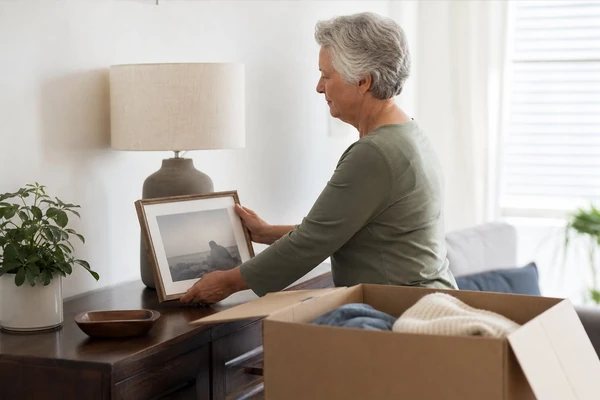
Boxes for sorting household belongings
- Keep – for your new home
- Give – to friends or family
- Donate
- Sell
- Recycle/trash
Allow plenty of time to sort through belongings. Two weeks for one room is a good guideline to make sure you and your family aren’t forgetting anything while also ensuring the downsizing process doesn’t drag on endlessly.
Keep Moving Day Manageable
- Avoid making moving day a test of endurance. Offer plenty of snacks and drinks, make sure there’s a quiet space available if needed and designate one person to field questions. You may even want to arrange for your senior loved one to spend part of the day somewhere else while movers are coming and going.
- Pack a “going out” bag with essentials that you may need on moving day that won’t be going in the boxes or truck, such as medications, cell phone charger, toiletries, ID, change of clothes, keys, and important moving documents.
When Outside Help Makes Sense
There are many ways to make a senior move go more smoothly, ranging from enlisting the help of friends and family to hiring a team to assist with everything from downsizing and packing to making donations and setting up the new place. Professional help can be especially beneficial for long-distance family members, larger households, or complicated moves resulting from a change in health.
Look for senior moving services Denver that can meet your family’s unique needs while respecting family dynamics and treasured belongings. Before you hire any help, be sure to discuss your expectations for what kind of help you need, whether that is packing, unpacking, or both locations, and who will be making decisions about what items to keep or donate.
Consider the move complete not just when the boxes have been unloaded, but when your senior is feeling at home in the new place. It will likely take some time to get situated, to learn new routines, locate everything they need and figure out where things should go, including furniture. Resist the urge to unpack everything at once, start with rooms that will be used most, then work your way into less-essential belongings. Consider making a list of things that can wait, such as updating mail and records, making additional donations, and figuring out extra storage, to take care of after everyone has had a few weeks to adjust.
Tip: Start by making a list of everything that absolutely must be accessible the first day in the new place, room by room.
